In 2023-24 overdrawn accounts in NSW were a regulatory priority for NRAR.
The campaign focused on identifying water accounts in NSW that had entered into a negative balance. It aimed to bring them into compliance. Through extensive research and investigations, we can report on the outcomes of this campaign and delve into our findings.

Summary of the campaign
NRAR discovered that 6% of NSW water accounts were overdrawn in 2021-22 totalling more than 40,000 ML. This is the same as a medium size dam being taken out of the waterways every year.
In some cases, the overdrawn amount was due to accounting errors or incorrect licence usage. These created false positives that complicated compliance efforts. By using advanced models and algorithms in this campaign, we can now better spot real breaches. This means we can take appropriate regulatory action on a case-by-case basis.
The campaign aimed to change outdated behaviour. Some industries wrongly believed it was acceptable to overdraw water accounts if they repaid later in the same year. We worked to raise awareness across the state and encourage better water practices for future generations.
During the campaign, many instances of previously undetected non-compliance came to light. We reopened and reassessed 120 different accounts from 2021-22. We found 15 more users who broke the rules.
To address these breaches, we took a tiered enforcement approach. We issued penalty notices, advisory letters, and engaged directly with individuals. This hands-on approach to addressing specific compliance issues enhanced our reputation as a fair yet firm regulator.
Measuring progress
Outcomes
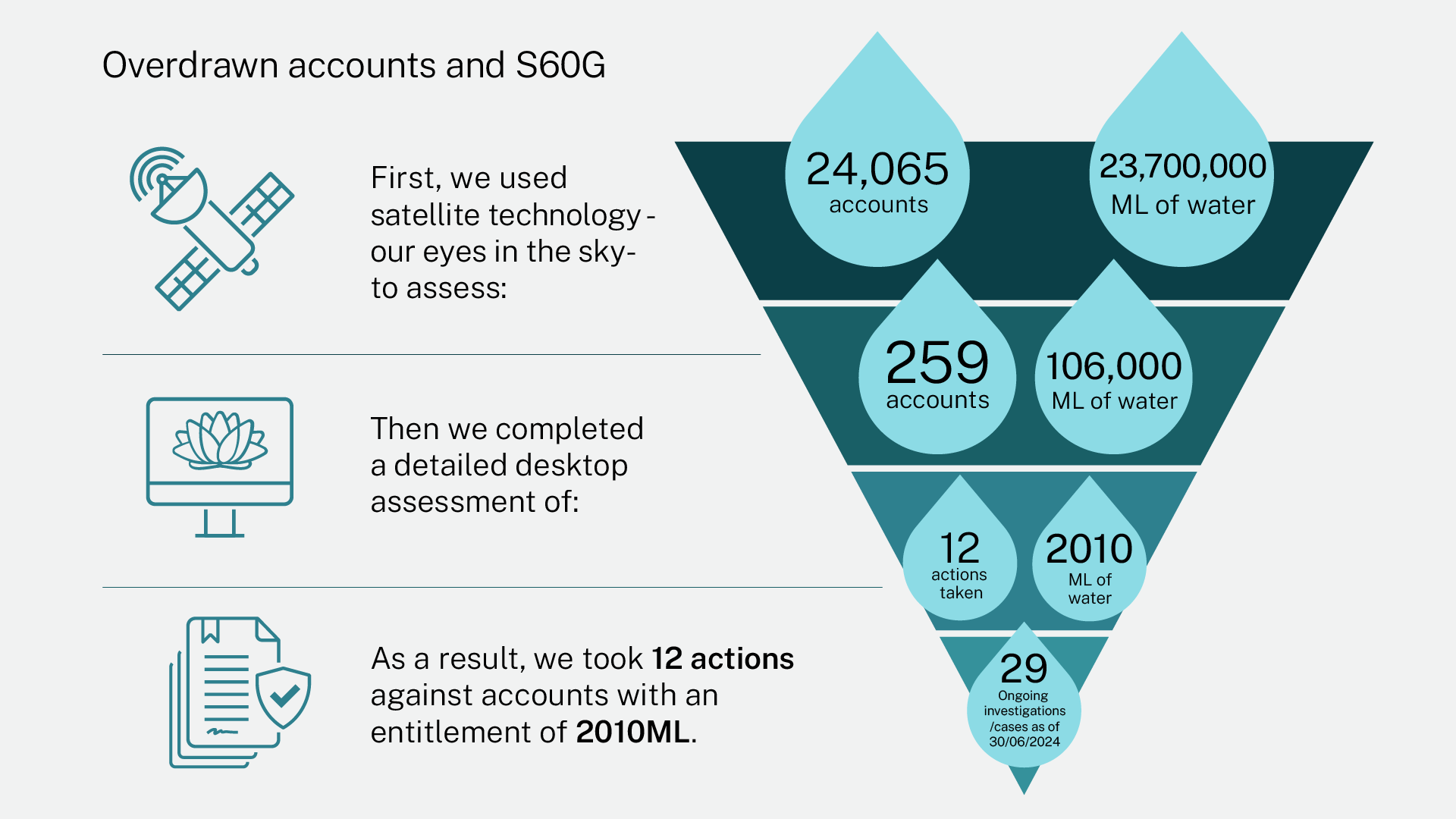
In addition to the action taken in 2021-22, we identified 15 more water users who were breaking the rules.
From 259 desktop audits on high-risk accounts we found 20% weren’t following the guidelines. When non-compliance was discovered, we acted by issuing advisory letters, warning letters, and penalty notices. The severity of environmental harm, history of non-compliance, and the amount of water overdrawn determined our regulatory action.
In total, 42 advisory letters, 10 warning letters, 1 caution and 1 penalty notice were issued. Advisory letters also include fact sheets that help educate water users.
The amount of water overdrawn in 2022/23 went down to 25,478 ML, a 36.25% reduction from the previous year. The total percentage fell from 6% to 3%. This shows our efforts are working. Higher rainfall over 12 months also contributed to fewer overdrawn accounts.
This campaign has significantly improved our detection of rule violations and helped focus resources on high-risk accounts. It has also provided greater assurance of fairer water distribution in NSW. An extra 1,450,506ML of water entitlement is now better protected. That’s equal to almost 3 Sydney Harbours.
Case study
From confusion to compliance
A rural school in the Murrumbidgee Valley was found to have used more water than its licence allowed for maintaining school grounds. This was despite previously receiving an advisory letter.
A detailed investigation revealed the school's efforts to comply were sincere. But, misunderstandings of licensing rules hindered them. This led to an unintended second overdraw.
Recognising the school's confusion, we talked with the school's executive to clearly explain the rules and requirements. During these discussions, guidance was provided on how they could better manage their water account.
The school's staff was thankful for the clarity and support they received. They acknowledged that they now understand the regulations. They said that it “was the best experience with any water authority they’d ever had.”
This case highlights our role at NRAR as both educator and enforcer. It shows our commitment to being “a firm but fair regulator”.